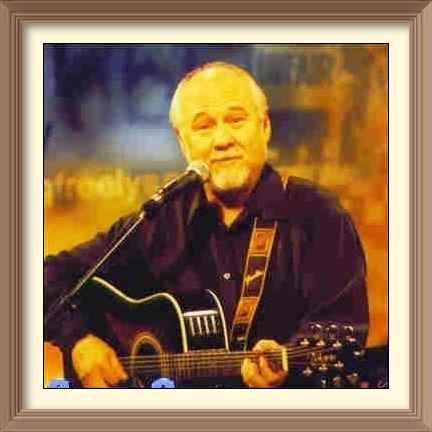
International Songwriters Association (ISA) Songs And Songwriting • Sonny Curtis


SONGWRITER PROFILE • SONNY CURTIS

[Click HERE To Go Back To The Start Of This Interview]

While you were doing jingles, you also wrote the theme for the Mary Tyler Moore show, which back then, was as big a TV show as "Friends" is now. How did that come about?
One of my dear friends, Doug Gilmore, who was road manager for Roger Miller, called me one day and said that Mary Tyler Moore was readying a sitcom, and they wanted a real good song for the theme. He also said that they had a couple of writers in mind, and asked me if I would like to have a shot at trying out for it as well.

Naturally I said yes, and later that morning, he dropped off a four-page format - you know "girl from the Midwest, moves to Minneapolis, gets a job in a newsroom, can't afford her apartment etc" which gave me the flavour of what it was all about. So I sat down there and then and wrote that song probably before any other songwriter  had even started on one, and just after lunch I rang Doug Gilmore back and said "where do I send it?" and he sent me over to see James L. Brooks who of course in recent years has produced things like "As Good As It Gets" and "Terms Of Endearment".

Anyway, James L. Brooks came into this huge empty room, no furniture apart from a phone lying on the floor, and at first, I thought he was rather cold  and sort of distant, and he said "We're not at the stage of picking a song yet, but I'll listen anyway". So I played the song, just me and my guitar, and next thing, he started phoning people, and the room filled up, and then he sent out for a tape recorder. So we taped it, and then got into the negotiating process and eventually, they decided to use it. That's basically how it all happened.


You actually released that song "Love Is All Around" on Ovation soon after, backed with a string quartet version of the Lennon/McCartney tune "Here There & Everywhere".
Well, what happened is that the tape they took off to Minneapolis was just me and a guitar, so I called Glen D. Hardin and asked him to come by and help me do a proper demo of the song. So we hired some strings,  Glen D did a lovely arrangement - he really is a great arranger - and we did the demo, and I sent it on to them. Of course when the show came out, it was a lot jazzier - but I liked that too, although I think I prefer the version used in the second series. Actually I had to re-write the lyrics then because the first season included the phrase "How will you make it on your own?" and of course, by the second season, that needed change. Anyway, Ovation picked up on the song, and wanted to release my version. Now around that time, I was doing an assignment for the Sherman School Of Music, which involved in my case, arranging a song for a string quartet, and I had also demoed the assignment. The song I had chosen was Lennon & McCartney's "Here There And Everywhere" and that demo ended up on the flip! I think I did another single to fulfill the Ovation contract. The next record I had out was on Mercury. I got this call from Bob Montgomery saying that he had this great song which an Australian writer had done called "Rock And Roll I Gave You All The Best Years Of My Life" and he thought I ought to do it. So I flew to Nashville, we did it there.

Actually, I thought it was a good record but there were a couple of versions out - mine was on Mercury, and Mac Davis had one [on Columbia], Terry Jacks did one [for Bell], and Kevin Johnson's own version came out [on Mainstream] and there were a few others also, so there was a lot of competition on that song. Then Bob Montgomery, who has always had faith in me, suggested we do the Hank Williams tune "Lovesick Blues" and Glen D. had done a really great arrangement of that tune for a Crickets album "Long Way From Lubbock" and Bob and myself sort of borrowed it for the single on Capitol. That charted for me too.

Around this time, you moved to Nashville?
Yeah, well we all sort of moved to Nashville, and for the next five years or so, we worked as the Crickets with Waylon Jennings. I bought a farm, 110 acres, J.I. bought a farm - he has about 300 acres now and he's serious about farming - and Joe B. has a couple of acres but he doesn't really farm. Both he and Glen D. live in West Nashville, so we're all close by.

The Crickets were back in the UK the following year?
Yeah, we did the Buddy Holly Week in London, that's J.I. Joe B. and myself, and then we came back in '79 to do another Buddy Holly Week and this time Paul McCartney and Wings, and Bob Montgomery, and the Everly Brothers were on stage too - it was quite an event.

Now, a few years after moving to Nashville, you signed to Elektra as a solo artist, and started a second chart career. How did that come about?
Well Jimmy Bowen, who of course was also from Texas, and had recorded some hits over at Clovis with Buddy Knox back in 1956, signed me to Elektra in 1979 and I stayed at Elektra for about three years, and you know, I'm sort of proud of those records. They were well made, and there were top musicians on all those sessions.

Your first two hits with Elektra were "The Cowboy Singer" and "Do You Remember Roll Over Beethoven".  How did they happen?
Well when we moved to Nashville, we started building a house, and for six months or so, the phone didn't ring, and I began to  think to myself - "What have I done - I've brought all of us halfway across America, and now we're all going to starve!" Anyway, I didn't have too much to do, so I started writing seriously and during that period I wrote "The Cowboy Song", "Do You Remember Roll Over Beethoven", "It's Not Easy Being Fifteen" which is one of my favourites, and a few more.  "The Cowboy Song" was the first one out on Elektra. I remember reading a detective magazine story, and the song was sort of based on that.

One of the big country hits of 1980 was your recording of "The Real Buddy Holly Story". Was that a reaction to the movie?
Yeah, well we were all invited down to Dallas to see the premiere of the movie "The Buddy Holly Story" which starred Gary Busey, and the minute the show was over, I went back to my hotel room and started writing that song. It was a total reaction to the film - I got to thinking that's not what happened - that's not the way it was.

You had other hits on Elektra, including one of the few cover versions you have done in your career.
Paul Simon's "Fifty Ways To Leave Your Lover"? Yeah, and I did a remake of "Love Is All Around" which charted. Let's see, "Good Ole Girls" was another one...."Married Women" was one. Yeah, there were a couple of good ones on Elektra.

Did you leave the Crickets during this period?
Yeah, I left around 1984. I did a solo tour of England in 1985 and then I came back again in September for a second tour. And I was back again in '87, and '88, and again in '89 and 1990, so I was keeping real busy!


Click Here To Continue

Get Our Free Songwriting Newsletter

Go To Our Site Map
ISA • International Songwriters Association (1967) Ltd
PO Box 46 Limerick City Ireland Tel 061-228837 Fax 061-2288379
ISA Website  http://www.songwriter.co.uk Editorial E-Mail  jliddane@songwriter.iol.ie

International Songwriters Association Limited
Registered In Dublin, Ireland Company Number 38917
Registered Address
High Chaperal, Raheen Heights, Limerick City, Ireland
Postal Address
PO Box 46, Limerick City, Ireland