javascript hit counter

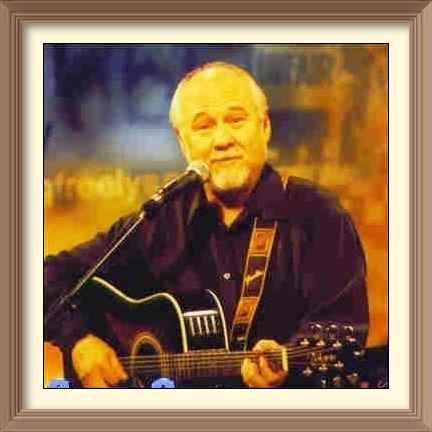
SONGWRITER PROFILE • SONNY CURTIS

[Click HERE To Go Back To The Start Of This Interview]

This Weeks Hits

Now, just like "When I Ask About Love", twenty years or so went by and then Leo Sayer revived "More Than I Can Say" selling another million copies of the song.
Talk about luck. The story I was told - I don't know how true it is - was that when they were down to the last track for the album, and they were working on picking that final song, Leo Sayer was in his hotel room, watching television, and on came this K-Tel commercial and he said - "Wow, I always wanted to do that song". And he did!

When you came out of the army, did you go straight back into the Crickets?
Well, almost! An old army buddy and I  had got mustered out together, and the two of us landed in New York intending to hang around for four or five days and kind of recuperate, if you know what I mean! So the first thing we did was go down to a liquor store and buy a couple of bottles of vodka, and we were just getting used to the idea of being civilians again when the phone rang and there was J.I. from Los Angeles saying "Get out here right now - we've an album to record for Liberty Records". So I got on a plane and when I landed, J.I. and Peggy Sue were there to meet me, and welcome me back into the real world! It was a different world too - Joe B had quit and gone back to Texas, and we had a new singer, Jerry Naylor, and a piano player - Glen D. Hardin!


The Crickets did get back in the US Top 10 in 1962 with the "Bobby Vee Meets The Crickets" album, but the subsequent singles from the new Crickets album "Something Old, Something New, Something Blue, Something Else", great songs like "Don't Ever Change"and "My Little Girl", didn't do too much in the US.
Well, "Don't Ever Change" was a tremendous record, and it was a Goffin-King song, but in America, it didn't really mean much even though as you say, the Vee/Crickets album was doing well. "My Little Girl" was a song I had written which was probably more in the old Crickets style than much of what we had recorded since 1960. What happened is that Tommy Roe had just had this massive hit "Sheila" which had a "Peggy Sue" feel to it, and was a very good song indeed, and we were listening to this and saying "Hum - that's our old sound and look how well he's doing!" so I came up with "My Little Girl", which took us back to our roots as it were.

Now at this time, you also started recording as a solo artist for Dimension Records.
Well I had this agreement with the Crickets that I could pursue a solo career on my own as well as working with the band. Now, I was living in the Sycamore Riviera Apartments in Hollywood, and down the hall was Lou Adler who owned Dimension, and we got friendly.

Anyway I had written a couple of songs, one was "So Used To Loving You" and J.I. and I had done one called "The Last Song I'm Ever Going To Sing" and Lou got me to record them as singles for Dimension. By now of course, the Beatles were making it big in the USA, and one day Lou said to me - "why don't you write a song about the Beatles?" Now, I had heard the Beatles in 1962 when we were doing the Bobby Vee Meets The Crickets tour of the UK, and I had fallen in love with them from day one.

So when I got back to Los Angeles, I went down to Liberty and looked through all the singles that had come in from Parlophone in London, picked out the Beatles ones and took them home to listen to them. I really loved those records. Anyway, Lou wanted a song about the Beatles, so he put me in this little room down at Screen-Gems, and I'd write some, and then he'd come by and he'd add his two cents, and the end result was "A Beatle I Wanna Be". The joke was that the whole Beatles thing was so new that when Dimension pressed the record, they spelled the name wrong - they spelled it as "Beetle". Anyway, the single came out - I was sort of embarrassed by it at the time, but it was just a fun record really.

Your next really big hit was the Andy Williams version of "A Fool Never Learns".
The Crickets had a manager by this time, Danny Whitman, and he got that song to Andy Williams manager, Allan Bernard, and because Andy needed something real commercial to go on the flip side of "Charade", which was from the Cary Grant film, he went for the song. And as it turned out, that was the one that made the top. Actually, I think it was a real good version of that song.

Now, that year, you also recorded for Imperial an instrumental album - "Beatles Hits Flamenco Style", which contained just one track written by you - "Ringo's Theme".
Well I'll tell you how that came about. Snuff Garrett was going through a divorce at the time, and I wasn't married - like I didn't get married until I was 31 years old and it seemed like everybody that got a divorce, I was their best friend! So Snuff and I did some serious hanging out and we were in my apartment one night and I was picking out this version of "She Loves You". Next thing I know, Snuff is talking about doing an album of Beatles tunes, and he's on the phone booking studio time for the following day! Well of course, I'm trying to explain that I need time to do arrangements but Snuff wants to hear none of that, and so, two days later, we're recording! Next thing I know. I have an album out on Imperial titled "Beatle Hits Flamenco Style" and of course, it's not quite flamenco style at all - more finger-picking style really. Don't get me wrong - I'm not ashamed of the album, but I really wish I had gotten more time to do some proper arrangements, but then Snuff was a businessman - a real nice guy - but primarily a businessman, and a lot of times he could be a little bit insensitive to the creative process!


Around about this time, you went back on the road with the Everly Brothers. Did that mean leaving the Crickets?
Not really. J.I also got a divorce from Peggy Sue, and he went back to Texas for a while, so the Crickets were not really active so I went back with the Everlies for about two years I think.  I was also doing a lot of session work, and that was very helpful because I learned a lot about the recording process when I was doing session work.

Then the Bobby Fuller Four did "I Fought The Law", which sold a million copies in the US. How did you meet him?
Well, Bobby came from El Paso, Texas, but I didn't actually know him. I guess he must have picked the song up from the "In Style" album. I only met him once - he called me to come down to a recording session they were doing in Los Angeles, and they were extremely nice people, and very talented. His death was terrible - very mysterious, and a really sad loss. He had a follow-up hit, which by coincidence was "Love's Made A Fool Of You", and that too was quite close to our own 1960 arrangement, but Bobby's versions were so much better produced. I liked his stuff. Of course "I Fought The Law" has turned out to be my most lucrative copyright to date.


There have been lots of versions...one by Hank Williams Jr, which I think is actually my favourite version of it...one by Johnny Rodriguez...another by Roy Orbison, one by Kris Kristofferson...the Nitty Gritty Dirt Band did it...Sam Neely has a version...the Clash did it of course!

Now that same year, you signed with Viva Records, and started on a string of solo country hits .
Viva was Snuff's label, and I was one of the first signings - I might have been the very first signing. The Shindogs did some stuff on Viva - Leon Russell did an album on Viva - but I was certainly in there at the start.

This album, "The 1st Of Sonny Curtis" was aimed at the country market, which was sort of taking you back to your roots, after the previous ten years in rock and roll.
Well it was aimed at the country market, but frankly, I have my reservations about the album. Snuff as I mentioned earlier, is a businessman, and he and I have been been good friends, but we've had our fallings-out too over the years. Now, I'm glad to say we're good friends again, but I have to be honest and say that Snuff did a few things in his time which really turned me off. That particular album was engineered by John Cale, or J.J. Cale as he's better known, and I started the album by going into Snuff's studio and doing just basic tracks with Glen D Hardin on piano, Jim Gordon on drums, and myself on guitar. We had just started  the tracks, when I had to go back home to Texas for a couple of weeks. Before I left, I put down scratch vocals over these tracks, and when I came back - Snuff had released the album - scratch vocals and everything! And that really hurt. I mean albums last forever, and they can come back to haunt you.  You see, I think Snuff signed me primarily as a songwriter, and he treated those tracks as glorified demos - but of course, several came out as singles as well - and frankly I don't much like that Viva stuff.

And yet they were hits - either for yourself or others. I think every track on that album was either a hit for you, or was covered by somebody!
Well let me see. "My Way Of Life"  charted for me, and so did "I Wanna Go Bumming Around". Actually, Floyd Cramer had a  cover of that as well.  Then there was "Atlanta Georgia Stray" from the second album and charted for me. And then of course, "The Straight Life" was a country hit for me and it also was covered on the pop charts by Bobby Goldsboro. I think what happened with that one is that Snuff was in Nashville and played a copy of the track for Bob Montgomery. Bob of course produced Bobby Goldsboro, so he took the track for him. Then Bing Crosby did a version of that, and Gary Lewis did one. Glen Campbell did it too - he was really big when he did it. "Gypsy Man" was done by Buddy Knox - it was the title track of one of his albums and I played on that actually, and of course J.J. Cale did that song as well. Then another track on Viva was "Where Will The Words Come From" which I wrote with Glen D. Hardin and which was covered also by Gary Lewis and by Rosanne Cash.

You know, Glen D. and I grew up in Meadow - he's been a real great friend of mine - and of course he was in the Crickets, and he also worked with Elvis for five years or so, so it was a real pleasure writing with him. Another song I did with Glen D. at that time was "Hung Up In Your Eyes" which was a pop hit for Brian Hyland, and was later covered also by LaCosta. "Destiny's Child" was covered by Waylon Jennings. Yeah, I suppose a number of them did well, but you know, I'm still  sore about that album!

A lot of covers! Did you actively go out to promote those songs to the people who ended up recording them?
No - not at all, I don't think I've ever written a song specifically for somebody, and I have always been very slow to promote my songs. I mean, I've never been able to go up to somebody and say "Hey man, I've just written this great song and it's just right for you". I really can't do that. Of course, you have the motel room show - you know, somebody comes to town and you all go over to the motel and sit around playing one guitar -  the guitar pool as Roger Miller called it! And of course, at those sessions, somebody might pick up on something you're playing and record it, but that's about it.

Did publishers help at all?
Well I think Snuff did a real good job promoting my songs, and frankly, I've had some really good luck with publishers along the way pushing my songs, because as I say, I'm not too good at doing that myself. 

After Viva, you went back to school. Why?
Well I suppose, I was at a bit of a loose end, and of course, by now I had the wherewithal to take time off and do what I wanted, and so I studied for a year at the Sherman School of Music - arranging mainly, and it was a real good time. It was also a tremendous help to me.

Was it around this time that you got into writing commercials and jingles?
Yeah, this singer friend of mine called me and said "I'm doing this jingle for this agency up in San Francisco and they want a song like 'The Straight Life' and I told them I know the guy that wrote that". Anyway, the agency sent me the material, I wrote the jingle, and for two years, I had the Olympia Beer commercial. Then through another friend, I got into contact with Don Piestrup who was probably the busiest jingle writer on the West Coast. He was a real great jazz player, and had worked with Stan Kenton, and he really gave me a great musical education - a great man, a genius, and he has been a major influence on me. Anyway, he called me one day to do the vocals on a Lumberjack Syrup commercial, and afterwards, he asked me if I'd like to do some more. So I did, and you know, the money was so good - I had no idea until then just how much money there was in jingles. We did them for McDonalds, Yamaha, Buick, Continental Airlines, Western Airlines - we seemed to have every airline, every burger, every car - and I guess for about four years, I devoted most of my time to doing them, in between going out on the road with the Crickets.

Continued

Get Our Free Songwriting Newsletter

Go To Our Site Map
ISA • International Songwriters Association (1967) Ltd
PO Box 46 Limerick City Ireland Tel 061-228837 Fax 061-2288379
ISA Website  http://www.songwriter.co.uk Editorial E-Mail  jliddane@songwriter.iol.ie

International Songwriters Association Limited
Registered In Dublin, Ireland Company Number 38917
Registered Address
High Chaperal, Raheen Heights, Limerick City, Ireland
Postal Address
PO Box 46, Limerick City, Ireland