|
Carole King was born Carol Joan Klein on February 9, 1942, in Manhattan, New York City, and she grew up in the Midwood and Brooklyn neighborhoods of New York.
Her father, Sydney Klein, worked as a fire lieutenant and her mother, Eugenia “Genie” (Cammer) Klein, was a speech therapist and had theatrical interests that helped foster Carole’s early love of music. She was raised in a secular Jewish household and had siblings with whom she shared her childhood experiences in post-war Brooklyn. Her early exposure to music through her family and her mother’s encouragement shaped her budding talent from a very young age.
Carole’s formal education included attendance at James Madison High School in Brooklyn, where she formed a vocal quartet called the Co-Sines and began arranging and composing music. She later enrolled at Queens College in New York, a part of the City University of New York, where she met fellow aspiring musicians and songwriters. However, she did not complete her college education, choosing instead to focus on her burgeoning career in music and her personal life, including marriage to fellow songwriter, lyricist Gerry Goffin in 1959.
Her musical education was largely grounded in family influence and practical experience. She learned to play piano as a child and was composing songs by her early teens. Carole’s proficiency at the piano and her intuitive grasp of melody and harmony developed alongside her formal schooling. Her involvement in performance groups in high school, coupled with early work recording demos and singing backup on sessions, provided her with invaluable training in the craft of songwriting and performance.
Carole’s early career in the music industry began in the late 1950s when she started writing songs and recording demos. While still a teenager, she and Gerry Goffin began to write songs together, with Carole composing the music and Goffin providing lyrics. They were signed to Don Kirshner’s Aldon Music, based in New York’s famed Brill Building, where they wrote numerous hits for other artists. Their first major success came with “Will You Love Me Tomorrow,” recorded by the Shirelles and reaching number one on the U.S. charts in 1961, shortly before Carole turned nineteen.
During the 1960s, Carole and Gerry wrote a string of hit songs that became staples of the era’s pop music. These included “Take Good Care of My Baby” for Bobby Vee, “The Loco-Motion” for Little Eva, “Up on the Roof” for the Drifters, “One Fine Day” for the Chiffons, “Don’t Bring Me Down” for the Animals, and “(You Make Me Feel Like) A Natural Woman,” most famously recorded by Aretha Franklin. Carole’s songwriting during this period established her as one of the most successful and influential writers in popular music.
Her successful period in the music industry extended into her work as a performer in the 1970s. After moving to Los Angeles in 1968, she played piano and sang on James Taylor’s album "Sweet Baby James" and toured with him, which encouraged her to pursue a solo career. Her own recording career took off with the release of the album "Writer" in 1970, but it was "Tapestry" in 1971 that made her a household name. "Tapestry" stayed at number one on the Billboard album chart for fifteen weeks and remained a bestseller for years. It won four Grammy Awards, including Record of the Year, Song of the Year for “You’ve Got a Friend,” Best Female Vocal Performance, and Album of the Year, cementing her status as a leading figure in the singer-songwriter movement.
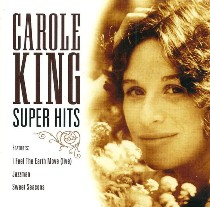
Carole’s body of work included hundreds of songs written or co-written over the course of her career. In addition to those already mentioned, her compositions encompassed both pieces for other artists and her own recordings. Her solo repertoire included enduring songs such as “It’s Too Late,” “I Feel the Earth Move,” “So Far Away,” “Jazzman,” and her own versions of earlier hits like “Will You Love Me Tomorrow.” She wrote or co-wrote more than 400 songs that were recorded by many artists, resulting in well over 100 hit singles on the charts.
Carole’s honours and awards reflect her remarkable influence. She was inducted into the Songwriters Hall of Fame in 1987 and received the Johnny Mercer Award in 2002. She and Goffin were jointly inducted into the Rock and Roll Hall of Fame in 1990 as nonperformers, and she was later inducted again as a performer. In 2013 she became the first woman to receive the Library of Congress Gershwin Prize for Popular Song, and in 2015 she was honoured with the Kennedy Center Honors. Across her career she won multiple Grammy Awards, including a Lifetime Achievement Award.
Carole King’s monumental talent lies in her rare combination of melodic gift, lyrical sensitivity in collaboration, and her ability to convey deep emotion through simple yet resonant musical structures. Her songwriting displays a natural fluency with melody and harmony that allow her to craft songs that speak to universal human experiences, and her transition from behind-the-scenes writer to celebrated performing artist showcased her versatility and depth.
Her influence reshaped popular music by contributing significantly to the rise of the singer-songwriter tradition in the 1970s and by creating a catalog of songs that have become part of the cultural fabric. In examinations of her legacy, critics have noted her role in expanding the presence of women in the music industry and the enduring power of her work across generations.
Her legacy in the history of popular music is secure: she stands as one of the most successful and influential songwriters and performers of the 20th century, whose songs continue to be discovered by new audiences and whose impact is felt in the work of countless artists who followed her.
© Jim Liddane
Copyright Songwriter Magazine, International Songwriters Association & Jim Liddane: All Rights Reserved
This is just one of the many profiles of leading songwriters, singers, musicians and music industry personnel, published by the International Songwriters Association and "Songwriter Magazine". Please click HERE for a full list.
The Main Menu

ISA • International Songwriters Association (1967)
internationalsongwriters@gmail.com
The Small Print
This International Songwriters Association 1967 site is a non-profit non-commercial re-creation of portions of the full site originally published by the International Songwriters Association Limited, and will introduce you to the world of songwriting. It will explain music business terms and help you understand the business concepts that you should be familiar with, thus enabling you to ask more pertinent questions when you meet with your accountant/CPA or solicitor/lawyer.
However, although this website includes general information about legal issues and legal developments as well as accounting issues and accounting developments, it is not meant to be a replacement for professional advice. Such materials are for informational purposes only and may not reflect the most current legal/accounting developments.
Every effort has been made to make this site as complete and as accurate as possible, but no warranty or fitness is implied. The information provided is on an "as is" basis and the author(s) and the publisher shall have neither liability nor responsibility to any person or entity with respect to any loss or damages arising from the information contained on this site. No steps should be taken without first seeking competent legal and/or accounting advice
Some pictures on this site are library images supplied by (amongst others) the ISA International Songwriters Association (1967), International Songwriters Association Limited, Dreamstime Library Inc, BMI (Broadcast Music Inc), ASCAP (American Society Of Songwriters, Authors and Publishers), PRS (Performing Rights Society), PPS (Professional Photographic Services), RTE (Radio Telefis Eireann) TV3, and various Public Relations organisations. Other pictures have been supplied by the songwriters, performers, or music business executives interviewed or mentioned throughout this website, while certain pictures are commercial stock footage of businesses and office environments generally, rather than specific images of the ISA, its personnel, facilities or members.
In any event, all images are and remain the property of the individual owners unless indicated to the contrary.
Home •
Interviews •
Writing A Song
|