|
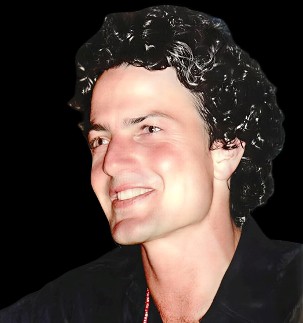
Billy Steinberg was born William Endfield Steinberg, on 16th February 1950, in Fresno, California, but grew up in Palm Springs. An enthusiastic record collector, he became fascinated by both the cultural ferment and the commercial realities of the burgeoning Rock and Roll music scene. His early influences included Ricky Nelson, the Everly Brothers, Jackie Wilson, Hank Ballard, The Drifters, Doris Troy, and inevitably The Beatles, whose music Billy first heard when he was just 13 years old.
The music of The Beatles led to Billy forming his first band, The Fables which performed locally, and although his childhood ambition had been to be a baseball player, he soon turned his attention to the possibility of becoming involved in music. By now his tastes had widened to include everybody from Bob Dylan, Muddy Waters, Big Mama Thornton, Jimmy Reed, Bo Diddley, and Howlin’ Wolf to Smokey Robinson, Otis Redding, Al Green, Marvin Gaye, Stevie Wonder, Chuck Berry, James Brown, Hank Williams, Van Morrison, Jimi Hendrix, and Laura Nyro.
His father, Lionel Steinberg, ran the David Freedman Company, one of the most important table grape operations in California, and having attended Cate School in Carpinteria, California, in 1968 Billy went on to study at Bard College, situated in Annandale-on-Hudson, 90 miles north of New York City, a college whose students over the years would include songwriters Richard M. Sherman and Robert B. Sherman, comedian Chevy Chase, Walter Becker and Donald Fagen of Steely Dan, along with such actors as Mia Farrow and Larry Hagman.
At Bard, Billy gravitated toward lyric writing (he had majored in literature because the college's music department was almost solely devoted to classical music) and soon developed a style that combined conversational directness with emotional clarity, often rooted in autobiographical experience, having absorbed an early understanding of popular song as both personal expression and professional craft, an outlook that shaped his entire career.
While at college, his grandmother Selma Freedman, gifted him with a Gibson acoustic guitar and he took up writing songs seriously, even travelling up to New York to promote his early tunes to legendary songwriters Jerry Leiber and Mike Stoller. However in his third year at Bard, he began to experience panic attacks, dropping out of college and returning home to seek psychoanalysis.
Two years later, having recovered, he went to work in the family grape business but soon after, formed his first band, Billy Thermal - Thermal being the name of the town where his family's grap business operated - alongside guitarist Craig Hull, bassist Bob Carlisle and drummer Efren Espinosa.
Billy Thermal performed at The Bla Bla Cafe, Madame Wong’s and The Troubadour, attracting the attention of producer Richard Perry who had just formed his own Planet Records, who agreed to make an album with them. Soon after, Linda Ronstadt was played "How Do I Make You" - one of Billy's songs from the yet-to-be-released LP, and promptly recorded it herself. The single was a huge US hit, and suddenly, at the age of 30, Billy found himself a professional songwriter. More success followed. Pat Benatar recorded two more of the songs, "I’m Gonna Follow You" and "Precious Time", while Rick Nelson released "Don’t Look At Me".
Their album however, as never released, and the band soon broke up. Although Billy was initially disappointed, he later acknowledged that his stage-fright would probably have made touring difficult anyway, saying "I came to realize that I was extremely fortunate to be able to forge a career as a songwriter".
The following year, while attending a party at the home of producer Keith Olsen, Billy was introduced to Tom Kelly. Although both were opposite in personality, they shared a love of the same type of music, and decided to collaborate, forming a highly productive partnership. Tom's melodic instincts complemented Steinberg’s confessional lyrical voice. Their collaboration emerged at a moment when pop music increasingly valued emotional immediacy, and their songs quickly attracted the attention of major recording artists.
One of their earliest and most enduring successes came with "Like a Virgin", recorded by Madonna, which transformed personal vulnerability into a bold pop metaphor and became one of the defining hits of the 1980s.
Throughout that decade, Steinberg established himself as one of the era’s most reliable hitmakers. He co-wrote "True Colors", recorded by Cyndi Lauper, a song whose compassionate affirmation resonated far beyond its chart success and became an anthem of self-acceptance. For The Bangles, he co-wrote "Eternal Flame", demonstrating his ability to pair intimate sentiment with timeless melody. His work also extended to powerhouse vocalists, including Whitney Houston, for whom he co-wrote "So Emotional", balancing rhythmic urgency with lyrical openness.
Over a ten-year period, his hits included “ Eternal Flame” (Bangles), “In Your Room” (Bangles), “I Drove All Night” (Cyndi Lauper, Roy Orbison, Celine Dion), “Alone” (Heart), “I Touch Myself” (Divinyls) and “I’ll Stand By You” (Pretenders).
In the 1990s and beyond, Steinberg continued to write successfully, adapting his voice to changing pop landscapes while maintaining his hallmark sincerity. He collaborated with artists across genres and generations, contributing songs that foregrounded emotional truth rather than stylistic novelty. Alongside his songwriting, he remained an articulate advocate for the songwriter’s craft, often speaking about the importance of honesty and vulnerability in popular lyrics. His work appeared consistently on international charts, and his songs accumulated extensive radio play, cover versions, and cultural afterlives in film and television.
As a songwriter, Steinberg’s principal talent lay in his ability to translate private feelings into universal statements without sacrificing specificity. His lyrics often drew directly from personal experience, yet they avoided self-indulgence through disciplined structure and clear imagery. He possessed a rare instinct for emotional timing, knowing when to be plainspoken and when to rely on metaphor, and his words consistently served the song rather than the ego of the writer.
Billy Steinberg’s legacy in the history of popular music rested on his role in redefining pop lyricism during the late twentieth century. He helped normalize emotional candour in mainstream songwriting, proving that vulnerability could coexist with commercial success. His songs endured not merely as period hits but as standards that continued to resonate with new audiences, securing his place among the most influential and respected songwriters of the modern pop era.
International Songwriters Association Hall of Fame member.
Billy Steinberg died on the 16th of February 2026 in Brentwood, California, USA, at the age of 75, from cancer.
© Jim Liddane
Copyright Songwriter Magazine, International Songwriters Association & Jim Liddane: All Rights Reserved
This is just one of the many profiles of leading songwriters, singers, musicians and music industry personnel, published by the International Songwriters Association and "Songwriter Magazine". Please click HERE for a full list.
The Main Menu

ISA • International Songwriters Association (1967)
internationalsongwriters@gmail.com
The Small Print
This International Songwriters Association 1967 site is a non-profit non-commercial re-creation of portions of the full site originally published by the International Songwriters Association Limited, and will introduce you to the world of songwriting. It will explain music business terms and help you understand the business concepts that you should be familiar with, thus enabling you to ask more pertinent questions when you meet with your accountant/CPA or solicitor/lawyer.
However, although this website includes general information about legal issues and legal developments as well as accounting issues and accounting developments, it is not meant to be a replacement for professional advice. Such materials are for informational purposes only and may not reflect the most current legal/accounting developments.
Every effort has been made to make this site as complete and as accurate as possible, but no warranty or fitness is implied. The information provided is on an "as is" basis and the author(s) and the publisher shall have neither liability nor responsibility to any person or entity with respect to any loss or damages arising from the information contained on this site. No steps should be taken without first seeking competent legal and/or accounting advice
Some pictures on this site are library images supplied by (amongst others) the ISA International Songwriters Association (1967), International Songwriters Association Limited, Dreamstime Library Inc, BMI (Broadcast Music Inc), ASCAP (American Society Of Songwriters, Authors and Publishers), PRS (Performing Rights Society), PPS (Professional Photographic Services), RTE (Radio Telefis Eireann) TV3, and various Public Relations organisations. Other pictures have been supplied by the songwriters, performers, or music business executives interviewed or mentioned throughout this website, while certain pictures are commercial stock footage of businesses and office environments generally, rather than specific images of the ISA, its personnel, facilities or members.
In any event, all images are and remain the property of the individual owners unless indicated to the contrary.
Home •
Interviews •
Writing A Song
|