|
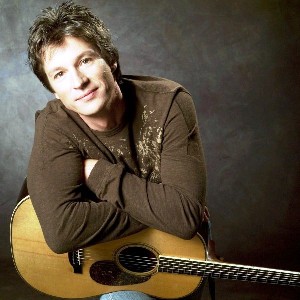
Ronnie Bowman was born William Franklin Bowman, on 9th July 1961, in Mount Airy, North Carolina. He grew up in a rural environment steeped in traditional country and bluegrass music, influences that shaped both his vocal style and his songwriting sensibility from an early age. Raised in a musical family, he learned to sing and play guitar while still a child, absorbing the high, lonesome sound associated with the region and developing a keen ear for harmony. From the age of three, Ronnie played and sang with his family band, comprising his parents and four sisters, performing mainly in churches in North Carolina and Virginia.
He came to prominence in the late 1980s and early 1990s, first as a member of The Lost and Found, and from 1990 on, as a member of the bluegrass group The Lonesome River Band, one of the most progressive and influential ensembles within contemporary bluegrass. He played a decisive role in modernising the band’s repertoire, introducing songs that blended traditional themes with a more contemporary emotional and melodic sensibility. His tenor voice, expressive and slightly plaintive, became one of the defining sounds of the group.
During his years with The Lonesome River Band whose 1991 album "Carrying the Tradition" was the International Bluegrass Music Association's 1991 Album of the Year, Bowman wrote or co-wrote a number of songs that became widely admired within bluegrass circles. Ronnie's compositions demonstrated his gift for marrying strong melodic lines with lyrics rooted in everyday experience, loss, longing, and resilience, with his songwriting often reflecting a narrative quality, drawing on storytelling traditions while remaining accessible to modern audiences.
After leaving the band in the early 2000s, Bowman pursued a solo career that further expanded his musical reach. His solo recordings, including the award-winning album "Cold Virginia Night", showed a willingness to incorporate elements of country, gospel, and even soft rock, without abandoning the core bluegrass aesthetic that defined his earlier work. As a solo artist, he continued to write prolifically, refining a style that balanced commercial appeal with emotional authenticity.
Bowman’s reputation as a songwriter grew significantly in Nashville, where he became an in-demand collaborator. He wrote songs that crossed from bluegrass into mainstream country music, achieving particular success with “It’s Getting Better All the Time,” co-written with Donny Kees and recorded by Brooks & Dunn, which reached the top of the Billboard Hot Country Songs chart in 2005. He also co-wrote “Never Wanted Nothing More,” recorded by Kenny Chesney, another major country hit that showcased his ability to craft songs with broad commercial resonance while retaining lyrical sincerity.
In addition to these successes, Bowman contributed songs to several artists, demonstrating versatility across different strands of country music. His compositions often featured clear, memorable hooks combined with emotionally direct lyrics, qualities that made them attractive to performers seeking material with both depth and accessibility. At the same time, he maintained strong ties to the bluegrass community, writing and recording material that continued to appeal to that audience.
Those who recorded Ronnie's songs included Lee Ann Womack ( "The Healing Kind"), The Mark Newton Band ("It Ain't Happened Yet", Jake Owen ("The Journey of Your Life"), Ralph Stanley ("A Mother's Prayer", The Grascals ("Life Finds A Way"), Cody Johnson "(I Wouldn't Go There) If I Were You", Chris Stapleton ("Nobody to Blame", "More of You" and "Outlaw State of Mind"), Irene Kelley ("Johnson's Hardware Store"), and Josh Williams "Modern Day Man", and "Let It Go".
Ronnie also produced albums for Wyatt Rice and Santa Cruz,
Melonie Cannon and The Steep Canyon Rangers, while appearing on albums by John Fogerty, Mac Wiseman, Alan Jackson and Loretta Lynn.
As a performer, Ronnie Bowman earned respect for his interpretative skills as much as for his songwriting. His phrasing conveyed a natural sense of storytelling, and his vocal delivery balanced technical control with a raw, emotive edge. Whether performing traditional material or his own compositions, he brought a distinctive sincerity that resonated with listeners and fellow musicians alike.
Ronnie Bowman was recognised as a songwriter of considerable subtlety and craft, particularly adept at blending traditional Appalachian influences with contemporary country idioms. His melodies tended toward clarity and memorability, while his lyrics avoided excessive ornamentation in favour of direct emotional communication. If his work occasionally adhered closely to established genre conventions, this consistency also formed part of his strength, allowing him to operate effectively within both bluegrass and mainstream country frameworks without diluting his artistic identity.
His legacy in the history of popular music rested on his role as a bridge between bluegrass tradition and modern country songwriting. Through his work with The Lonesome River Band, he helped push bluegrass toward a more contemporary sound, and through his Nashville successes, he brought elements of that tradition into the commercial mainstream. While he may not have achieved the public profile of some of the artists who recorded his songs, his influence endured in the repertoire he created and in the respect he commanded among musicians, songwriters, and informed listeners.
Ronnie Bowman died on the 22nd of March 2026 in the Vanderbilt Hospital in Nashville, Tennessee, USA at the age of 64, from injuries sustained in a motorcycle accident in Ashland City the previous day.
© Jim Liddane
Copyright Songwriter Magazine, International Songwriters Association & Jim Liddane: All Rights Reserved
This is just one of the many profiles of leading songwriters, singers, musicians and music industry personnel, published by the International Songwriters Association and "Songwriter Magazine". Please click HERE for a full list.
The Main Menu

ISA • International Songwriters Association (1967)
internationalsongwriters@gmail.com
The Small Print
This International Songwriters Association 1967 site is a non-profit non-commercial re-creation of portions of the full site originally published by the International Songwriters Association Limited, and will introduce you to the world of songwriting. It will explain music business terms and help you understand the business concepts that you should be familiar with, thus enabling you to ask more pertinent questions when you meet with your accountant/CPA or solicitor/lawyer.
However, although this website includes general information about legal issues and legal developments as well as accounting issues and accounting developments, it is not meant to be a replacement for professional advice. Such materials are for informational purposes only and may not reflect the most current legal/accounting developments.
Every effort has been made to make this site as complete and as accurate as possible, but no warranty or fitness is implied. The information provided is on an "as is" basis and the author(s) and the publisher shall have neither liability nor responsibility to any person or entity with respect to any loss or damages arising from the information contained on this site. No steps should be taken without first seeking competent legal and/or accounting advice
Some pictures on this site are library images supplied by (amongst others) the ISA International Songwriters Association (1967), International Songwriters Association Limited, Dreamstime Library Inc, BMI (Broadcast Music Inc), ASCAP (American Society Of Songwriters, Authors and Publishers), PRS (Performing Rights Society), PPS (Professional Photographic Services), RTE (Radio Telefis Eireann) TV3, and various Public Relations organisations. Other pictures have been supplied by the songwriters, performers, or music business executives interviewed or mentioned throughout this website, while certain pictures are commercial stock footage of businesses and office environments generally, rather than specific images of the ISA, its personnel, facilities or members.
In any event, all images are and remain the property of the individual owners unless indicated to the contrary.
Home •
Interviews •
Writing A Song
|