|
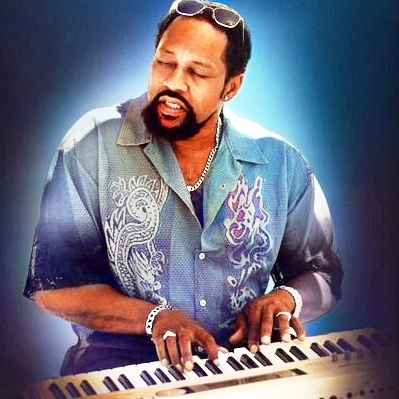
Victor Willis was born Victor Edward Willis, on 1st July 1951, in Dallas, Texas, USA, although he spent much of his childhood in California after his family relocated there. He grew up in a religious household and sang in church from an early age, where he developed the powerful baritone voice that later became one of the defining sounds of disco music.
His musical interests expanded during his teenage years, and while attending school in the San Francisco Bay Area he became involved in theatre and live performance. His natural stage presence and commanding vocal ability soon attracted professional attention.
Victor began his career as a stage actor before achieving fame in popular music. During the early 1970s he appeared in a number of theatrical productions, including performances in the Broadway musical "The Wiz", in which he played the Scarecrow. His theatrical background gave him an expressive, dramatic style that distinguished him from many contemporary pop singers. He also appeared in touring productions and developed a reputation as an energetic and charismatic performer.
His life changed dramatically in 1977 when French producers Jacques Morali and Henri Belolo, together with businessman Neil Bogart, created the disco group the Village People. Victor became the original policeman in the group's famous line-up of costumed characters and immediately emerged as its principal lead vocalist. His rich, resonant voice dominated many of the group's recordings and became inseparable from their international success. While the group's striking visual image attracted enormous public attention, Victor contributed much more than his vocal performances. Unlike several of the other members, he also played a major creative role in writing many of the songs that established the Village People as one of the defining acts of the disco era.
Working principally with Jacques Morali and Henri Belolo, Victor wrote or co-wrote a remarkable succession of international hits. Among the earliest successes was "San Francisco (You've Got Me)", which helped establish the group's reputation in dance clubs before they achieved worldwide fame. He then co-wrote "Macho Man", a song whose infectious rhythm, exuberant chorus and playful celebration of exaggerated masculinity made it one of disco's best-known anthems. The song reached the American Top 40 and became a permanent fixture of dance floors, sporting events and popular culture.
Victor also co-wrote "YMCA", arguably the Village People's signature song and one of the most recognisable recordings in the history of popular music. Released in 1978, the song combined an irresistible melody, memorable chorus and uplifting message of community and recreation. Although the lyrics generated decades of debate regarding their meaning, the song achieved extraordinary popularity across generations and cultures. It topped charts in numerous countries, became one of the best-selling singles of the disco era and inspired the famous arm movements that audiences around the world continued to perform at parties, weddings and sporting occasions. The song endured as an international standard and remained one of the most frequently played recordings of the twentieth century.
Among Victor's other important songwriting achievements was "Go West", another composition that outlived its original disco context. Although initially only a moderate commercial success for the Village People, the song gained renewed international prominence in 1993 when it was covered by the Pet Shop Boys. Their version became a major worldwide hit and introduced Victor's songwriting to an entirely new generation. The song's soaring melody and optimistic lyrics allowed it to be adopted for political campaigns, football chants and countless public celebrations.
Victor also contributed to songs such as "In the Navy", which cleverly combined military imagery with a driving dance beat and became another of the group's biggest international successes. Although the United States Navy initially welcomed the promotional value of the song, public discussion concerning its perceived double meanings led to some embarrassment for military officials. Nevertheless, the recording became another enduring favourite and demonstrated Victor's gift for combining humour, theatricality and instantly memorable hooks.
Other songs that Victor co-wrote included "Hot Cop", "Sodom and Gomorrah", "I Am What I Am", "Key West", "Ready for the 80's", "Can't Stop the Music", "Magic Night", and numerous album tracks that reinforced the Village People's identity as witty, exuberant entertainers whose music celebrated dancing, fantasy and escapism.
Despite the group's enormous success, tensions developed between Victor and the producers over financial matters, artistic direction and management. He left the Village People in 1979 after recording five studio albums with the group. Various singers replaced him during the following years, but many listeners regarded his voice as irreplaceable, and the group's commercial fortunes gradually declined following the collapse of the disco boom.
During the 1980s Victor pursued a solo career, releasing his self-titled album "Solo Man", which showcased a broader range of musical influences than the Village People's recordings. Although the album demonstrated his considerable vocal ability, it failed to achieve major commercial success. He also continued acting and appeared in several stage productions and television projects.
The years following his departure from the Village People proved personally difficult. Victor struggled with drug addiction, particularly involving cocaine, and his career suffered as a consequence. His marriage ended, and he largely disappeared from public view for several years. During the late 1980s he embraced Christianity, overcame his addiction and gradually rebuilt both his personal life and professional reputation. He later spoke openly about his experiences in the hope of encouraging others facing similar challenges.
One of the most significant chapters of Victor's later career involved copyright law rather than performance. Following changes to United States copyright legislation, he successfully exercised his statutory right to reclaim his share of the copyrights in many songs that he had written or co-written for the Village People. His legal victory established an important precedent concerning the rights of songwriters to recover ownership of their compositions after a specified period. The case attracted widespread attention throughout the music industry and strengthened the bargaining position of many composers seeking to regain control over their creative work.
Victor eventually returned to performing with a re-formed Village People and once again assumed the role most closely associated with him. His return delighted long-time admirers, who regarded his distinctive voice as an essential ingredient of the group's authentic sound. He continued touring internationally, performing many of the songs that had become permanent fixtures of popular entertainment. In recognition of their lasting cultural impact, "YMCA" received numerous honours and remained one of the most celebrated recordings ever produced during the disco era.
Victor Willis possessed one of the most distinctive voices in disco music. His rich baritone combined power, warmth and theatrical flair, enabling him to deliver dance songs with unusual authority and personality. As a songwriter he demonstrated an exceptional instinct for memorable choruses, rhythmic immediacy and lyrics that balanced humour with universal appeal. Although his compositions were seldom complex, they displayed remarkable craftsmanship in creating songs that audiences could instantly remember and enthusiastically join in singing. His theatrical background also gave his performances an energy and confidence that elevated material which, in less capable hands, might have seemed merely novelty entertainment.
Victor left a lasting legacy in the history of popular music through both his songwriting and his performances. His work with the Village People helped define the sound and spirit of the disco era, while songs such as "YMCA", "Macho Man", "Go West" and "In the Navy" transcended their original cultural moment to become international standards. These recordings continued to appear in films, television programmes, sporting events and public celebrations long after disco's commercial peak had faded. His successful defence of songwriters' copyright interests also influenced the wider music industry by affirming creators' rights to regain ownership of their work. Taken together, his achievements established him not merely as the unmistakable voice of the Village People, but as one of the most significant singer-songwriters to emerge from the disco movement and a figure whose influence extended well beyond the dance floor.
Victor Willis died at the age of 74, in Los Angeles, California, USA, on 30th June 2026, from what was described as a short but aggressive illness.
© Jim Liddane
Copyright Songwriter Magazine, International Songwriters Association & Jim Liddane: All Rights Reserved
This is just one of the many profiles of leading songwriters, singers, musicians and music industry personnel, published by the International Songwriters Association and "Songwriter Magazine". Please click HERE for a full list.
The Main Menu

ISA • International Songwriters Association (1967)
internationalsongwriters@gmail.com
The Small Print
This International Songwriters Association 1967 site is a non-profit non-commercial re-creation of portions of the full site originally published by the International Songwriters Association Limited, and will introduce you to the world of songwriting. It will explain music business terms and help you understand the business concepts that you should be familiar with, thus enabling you to ask more pertinent questions when you meet with your accountant/CPA or solicitor/lawyer.
However, although this website includes general information about legal issues and legal developments as well as accounting issues and accounting developments, it is not meant to be a replacement for professional advice. Such materials are for informational purposes only and may not reflect the most current legal/accounting developments.
Every effort has been made to make this site as complete and as accurate as possible, but no warranty or fitness is implied. The information provided is on an "as is" basis and the author(s) and the publisher shall have neither liability nor responsibility to any person or entity with respect to any loss or damages arising from the information contained on this site. No steps should be taken without first seeking competent legal and/or accounting advice
Some pictures on this site are library images supplied by (amongst others) the ISA International Songwriters Association (1967), International Songwriters Association Limited, Dreamstime Library Inc, BMI (Broadcast Music Inc), ASCAP (American Society Of Songwriters, Authors and Publishers), PRS (Performing Rights Society), PPS (Professional Photographic Services), RTE (Radio Telefis Eireann) TV3, and various Public Relations organisations. Other pictures have been supplied by the songwriters, performers, or music business executives interviewed or mentioned throughout this website, while certain pictures are commercial stock footage of businesses and office environments generally, rather than specific images of the ISA, its personnel, facilities or members.
In any event, all images are and remain the property of the individual owners unless indicated to the contrary.
Home •
Interviews •
Writing A Song
|