|
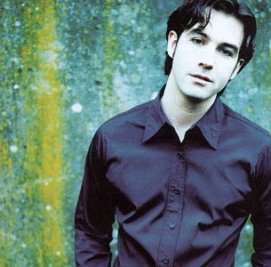
Duncan Sheik was born Duncan Sheik, on 18th November 1969, in Montclair, New Jersey. He spent his earliest years living with his grandparents, and music became an important part of his childhood. His grandmother had studied piano at the Juilliard School, and she encouraged his early interest in the instrument. He also developed a fascination with the guitar, eventually persuading his family to buy him an electric guitar, which quickly became one of his principal musical interests.
He received a broad musical education, studying classical and jazz music at summer camps while also playing rock music during the school year. At the age of twelve he played in his first band, Slightly Off, whose repertoire consisted largely of hard-rock covers. During his teenage years his musical tastes became considerably more adventurous. He developed a particular interest in British and European alternative music, including the Smiths, Tears for Fears, New Order, Depeche Mode, the Blue Nile, David Sylvian, the Cocteau Twins and Talk Talk. These influences later contributed to the atmospheric, sophisticated character of his own recordings.
Duncan attended Brown University, where he studied semiotics and graduated in 1992. While at Brown he played guitar for a time in a band associated with fellow student Lisa Loeb, although he initially regarded himself primarily as a guitarist rather than a singer. His songwriting gradually became more important, however, and during his college years he began to sing his own material. He made a demonstration recording which attracted attention in the music business and, after graduation, travelled to Los Angeles. He secured a substantial recording contract, but the arrangement proved unsatisfactory and left him in a prolonged period of professional uncertainty. Rather than abandoning music, he used the time to write extensively, eventually accumulating a large collection of songs from which he could select material for his first album. He later secured a recording agreement with Atlantic Records, providing the opportunity for a much more sympathetic artistic setting.
His self-titled debut album, "Duncan Sheik", appeared in 1996 and immediately established him as an unusually thoughtful singer-songwriter within the alternative-pop field. Duncan wrote almost all of the material himself, co-writing two songs with guitarist Fran Banish, and also played several instruments. The album combined acoustic guitar and understated vocals with keyboards, programmed drums and sophisticated string arrangements, creating a sound that was more atmospheric and harmonically adventurous than the conventional adult-pop music of the period. Among the songs were "She Runs Away", "Little Hands", "November" and "The End of Outside", all of which demonstrated his preference for introspective writing and subtle emotional detail.
The song that transformed his career was "Barely Breathing", a quietly dramatic examination of the emotional uncertainty surrounding a failing relationship. Written by Duncan, the song possessed an immediately memorable melody but avoided the conventional bombast associated with many contemporary pop hits. Its restrained vocal, intricate arrangement and sense of emotional distance gave it an unusual character, and it became a major international success in 1996 and 1997. The single reached the Top Twenty of the Billboard Hot 100 and remained on the American chart for an exceptional 55 weeks. It earned Duncan a Grammy nomination for Best Male Pop Vocal Performance and became the song with which the general public most closely associated him.
The success of "Barely Breathing" placed Duncan in an awkward position. He had never conceived himself as a conventional pop star, and the success of the single considerably enlarged his public profile without necessarily reflecting the wider musical ambitions of his work. His subsequent career therefore represented a gradual movement away from the commercial expectations created by his first hit. His second album, "Humming", appeared in 1998 and continued his interest in richly textured arrangements and introspective songwriting. Rather than attempting simply to reproduce the formula of "Barely Breathing", he developed a more expansive and sophisticated musical vocabulary. The record contained songs such as "Bite Your Tongue", "That Says It All" and "Nothing Special", while its arrangements demonstrated his continuing interest in combining intimate songwriting with elaborate sonic detail.
An important new chapter began through his meeting with the poet and playwright Steven Sater in 1999. Their collaboration initially developed through Steven’s theatrical writing, with Duncan setting Steven's lyrics to music. The partnership soon became central to both men's careers. They collaborated on Duncan's 2001 album "Phantom Moon", for which Steven supplied the lyrics and Duncan composed the music. The album marked a decisive movement towards the theatrical and literary side of Duncan's personality as a composer. Its songs possessed the emotional intimacy of singer-songwriter material while also displaying a stronger sense of narrative, character and dramatic atmosphere.
Duncan's interest in theatre eventually produced the achievement that became the defining work of his mature career. Steven introduced him to Frank Wedekind's controversial 1891 play "Spring Awakening", which concerned the sexual awakening, frustrations and repression experienced by adolescents in nineteenth-century Germany. Duncan responded by composing music that deliberately rejected the conventional Broadway sound of the time. He and Steven developed a score that combined contemporary alternative rock, folk, pop and more experimental textures with lyrics that retained a strong literary and theatrical quality. Songs including "Mama Who Bore Me", "The Bitch of Living", "Totally Fucked", "The Song of Purple Summer", "Touch Me", "The Dark I Know Well", "Left Behind" and "Those You've Known" demonstrated how successfully Duncan could adapt the language of contemporary popular music to dramatic storytelling.
"Spring Awakening" opened on Broadway in 2006 and became a major theatrical success. Its mixture of a nineteenth-century story and contemporary rock music appealed to audiences who might not normally have regarded traditional musical theatre as relevant to them. The production won eight Tony Awards in 2007, including Best Musical, while Duncan and Steven received the Tony Awards for Best Original Score and Duncan also received the award for Best Orchestrations. The original cast recording subsequently won the Grammy Award for Best Musical Show Album. The success of the production also helped establish a number of performers including Jonathan Groff, Lea Michele and John Gallagher Jr.
The achievement of "Spring Awakening" changed the way Duncan's career was perceived. He was no longer simply the singer who had recorded "Barely Breathing"; he had become a composer capable of bringing the musical language of alternative rock into the centre of American theatre. The songs he wrote with Steven showed a particularly strong understanding of the relationship between melody, atmosphere and dramatic situation. Rather than treating songs as interruptions to a narrative, Duncan used them to express thoughts and emotions that the characters could not easily articulate through ordinary dialogue. This approach helped give Spring Awakening much of its unusual intensity.
His recording career nevertheless continued. "Daylight" appeared in 2002 and explored a more expansive and polished form of his songwriting, while later albums included "White Limousine", "Phantom Moon" and the theatrical recording Whisper House. The latter originated as an album before developing into a stage musical, demonstrating the increasingly fluid boundary in Duncan's work between popular recording and theatre. He also contributed music to films and theatrical productions, including the 2004 film "A Home At The End Of The World". His work increasingly encompassed composition, orchestration and dramatic structure rather than concentrating exclusively on the conventional singer-songwriter format.
Duncan subsequently undertook a series of projects that reflected the breadth of his musical interests. He wrote music for "American Psycho", the stage adaptation of Bret Easton Ellis's controversial novel, which reached Broadway in 2016. Its score allowed him to draw upon the electronic and synth-pop music that had influenced him during his adolescence, particularly the sounds of Depeche Mode and other British groups. He also worked on theatrical projects including "Alice by Heart", again in collaboration with Steven Sater, and contributed music to productions based on literary and dramatic material. His theatre work extended beyond Broadway to productions such as "The Secret Life of Bees", "Bob & Carol & Ted & Alice", "Noir" and other projects. He also wrote music for productions of Shakespeare plays and continued to explore the possibilities of combining contemporary music with established dramatic forms.
His own recording career remained equally eclectic. He released "Covers ’80s" in 2011, an album devoted to interpretations of music by artists who had influenced him during his adolescence, including Depeche Mode, the Smiths and Tears for Fears. The album provided an illuminating indication of the musical world from which his own artistic personality emerged. Rather than treating those songs simply as nostalgic exercises, he approached them through his own atmospheric and restrained musical style. "Legerdemain" followed in 2015 and returned to original material, while his final studio album, "Claptrap", appeared in 2022. Across these records he remained committed to experimentation and resisted the pressure to reproduce the commercial sound of his early success.
Songwriting remained at the centre of Duncan's work even when the medium changed. "Barely Breathing" remained his most widely recognised individual composition, but songs such as "She Runs Away", "November", "Little Hands" and "The End of Outside" showed the qualities that distinguished his writing from straightforward commercial pop. He possessed a strong melodic sense, but his songs were also characterised by unusual harmonic movement, carefully chosen textures and lyrics that suggested more than they explained. He often created an emotional atmosphere rather than providing a simple narrative, leaving listeners to supply some of the meaning themselves. His partnership with Steven Sater brought another dimension to his songwriting, allowing him to work with lyrics of a literary and dramatic nature and to create music capable of carrying characters and stories.
Duncan left behind a body of work that encompassed alternative pop, singer-songwriter music, orchestral recording, film composition and modern musical theatre. His career was unusual not because he produced a large number of conventional commercial hits, but because he repeatedly used whatever recognition he gained in one field as an opportunity to move into another.
As a songwriter, Duncan Sheik possessed a rare combination of melodic accessibility and intellectual curiosity. "Barely Breathing" demonstrated that he could write an immediately memorable pop song without sacrificing subtlety, while his later work demonstrated a much broader compositional imagination. His voice was distinctive rather than conventionally powerful, but its vulnerability suited songs in which emotional uncertainty, reflection and restraint played a central role. His greatest strength lay perhaps in his ability to create atmosphere: chords, melodies, vocal phrasing and instrumental colour combined in his work to produce an emotional world that was recognisably his own. His songwriting also benefited from an unusual willingness to follow ideas into unfamiliar territory rather than remaining within the commercial formula that had first brought him fame.
His legacy in the history of popular music rested on two complementary achievements. "Barely Breathing" secured him a permanent place in the history of 1990s alternative pop, but "Spring Awakening" gave his career a much greater historical significance. By bringing the musical language of contemporary alternative rock into a major Broadway production, he helped demonstrate that serious musical theatre could draw directly upon the sounds, structures and attitudes of modern popular music without simply imitating them. His collaboration with Steven Sater produced a work that influenced a subsequent generation of musical theatre writers and performers, while his recordings preserved the more intimate, introspective side of his artistic personality. Duncan Sheik therefore remained an unusual figure in popular music: a successful pop songwriter who resisted becoming a conventional pop star, and a composer who carried the instincts of the singer-songwriter into theatre. His career demonstrated that a single successful pop record could be the beginning rather than the culmination of an artist's development, and his contribution to the meeting of popular music and modern musical theatre gave his comparatively short life a lasting place in the wider history of American songwriting.
Duncan Sheik died on the 17th of September 2026 in New York City, New York, USA, at the age of 56, from cardiac arrest, while undergoing treatment for an undisclosed illness.
© Jim Liddane
Copyright Songwriter Magazine, International Songwriters Association & Jim Liddane: All Rights Reserved
This is just one of the many profiles of leading songwriters, singers, musicians and music industry personnel, published by the International Songwriters Association and "Songwriter Magazine". Please click HERE for a full list.
The Main Menu

ISA • International Songwriters Association (1967)
internationalsongwriters@gmail.com
The Small Print
This International Songwriters Association 1967 site is a non-profit non-commercial re-creation of portions of the full site originally published by the International Songwriters Association Limited, and will introduce you to the world of songwriting. It will explain music business terms and help you understand the business concepts that you should be familiar with, thus enabling you to ask more pertinent questions when you meet with your accountant/CPA or solicitor/lawyer.
However, although this website includes general information about legal issues and legal developments as well as accounting issues and accounting developments, it is not meant to be a replacement for professional advice. Such materials are for informational purposes only and may not reflect the most current legal/accounting developments.
Every effort has been made to make this site as complete and as accurate as possible, but no warranty or fitness is implied. The information provided is on an "as is" basis and the author(s) and the publisher shall have neither liability nor responsibility to any person or entity with respect to any loss or damages arising from the information contained on this site. No steps should be taken without first seeking competent legal and/or accounting advice
Some pictures on this site are library images supplied by (amongst others) the ISA International Songwriters Association (1967), International Songwriters Association Limited, Dreamstime Library Inc, BMI (Broadcast Music Inc), ASCAP (American Society Of Songwriters, Authors and Publishers), PRS (Performing Rights Society), PPS (Professional Photographic Services), RTE (Radio Telefis Eireann) TV3, and various Public Relations organisations. Other pictures have been supplied by the songwriters, performers, or music business executives interviewed or mentioned throughout this website, while certain pictures are commercial stock footage of businesses and office environments generally, rather than specific images of the ISA, its personnel, facilities or members.
In any event, all images are and remain the property of the individual owners unless indicated to the contrary.
Home •
Interviews •
Writing A Song
|